
Why AI Still Cannot Replace Real Product Photography in Jewellery
AI-generated images are trending. They are fast, affordable, and visually impressive at first glance. But when it comes to jewellery photography, AI is still not a true substitute for real product shoots.
Jewellery is one of the most technically demanding and detail-sensitive categories in photography – and that’s where AI falls short.
1. Jewellery Is About Authentic Detail – Not Just Visual Appeal
Jewellery buyers are extremely detail-oriented. They zoom in to inspect:
- Diamond cut and clarity
- Prong finishing
- Stone setting precision
- Metal polish
- Texture and engraving
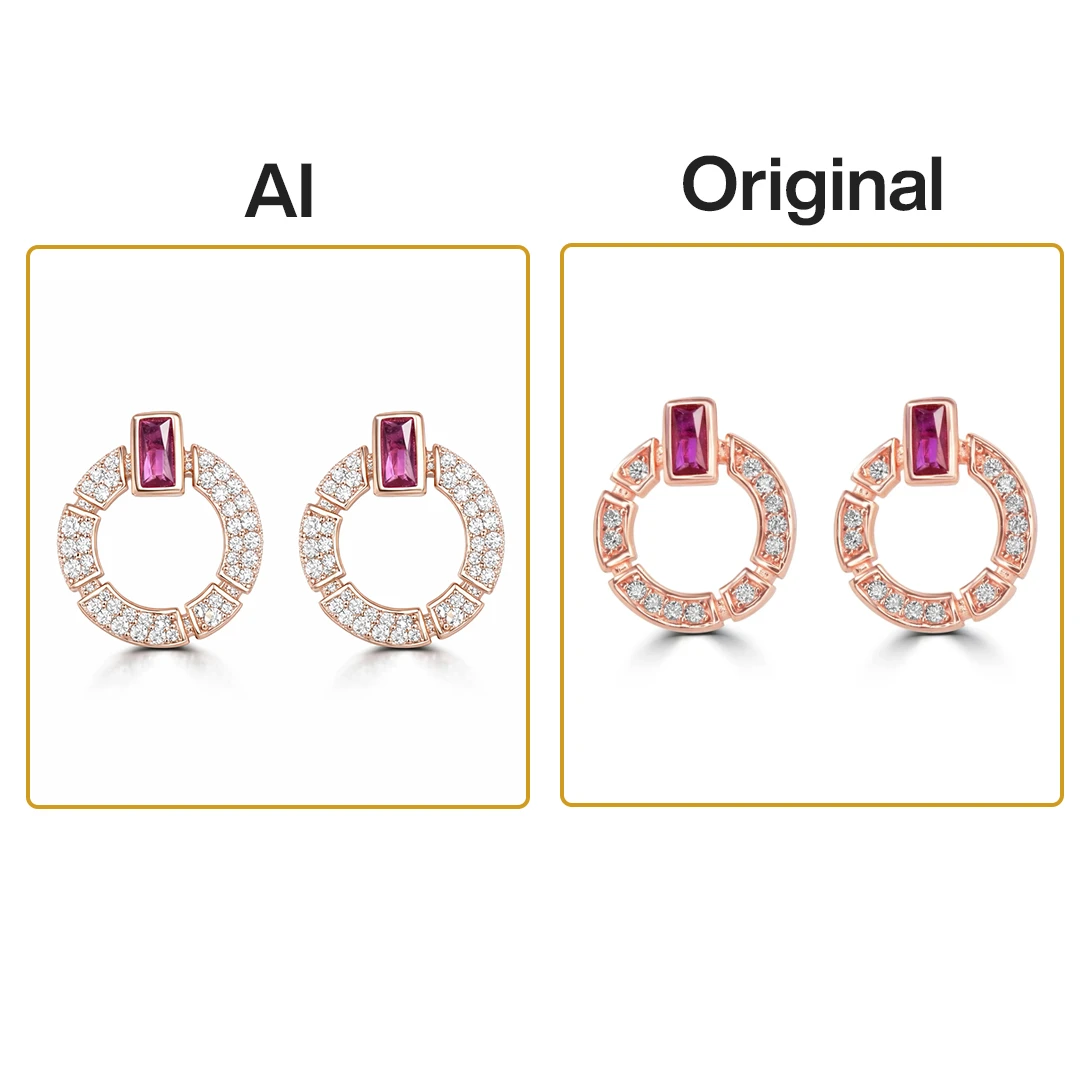
AI-generated images often create approximate sparkle and texture. But approximation is dangerous in luxury retail. A diamond’s fire, refraction, and brilliance depend on physics — light interacting with real facets.
In high-value jewellery, even a 1% misrepresentation can break trust.
2. Light Physics Cannot Be Fully Simulated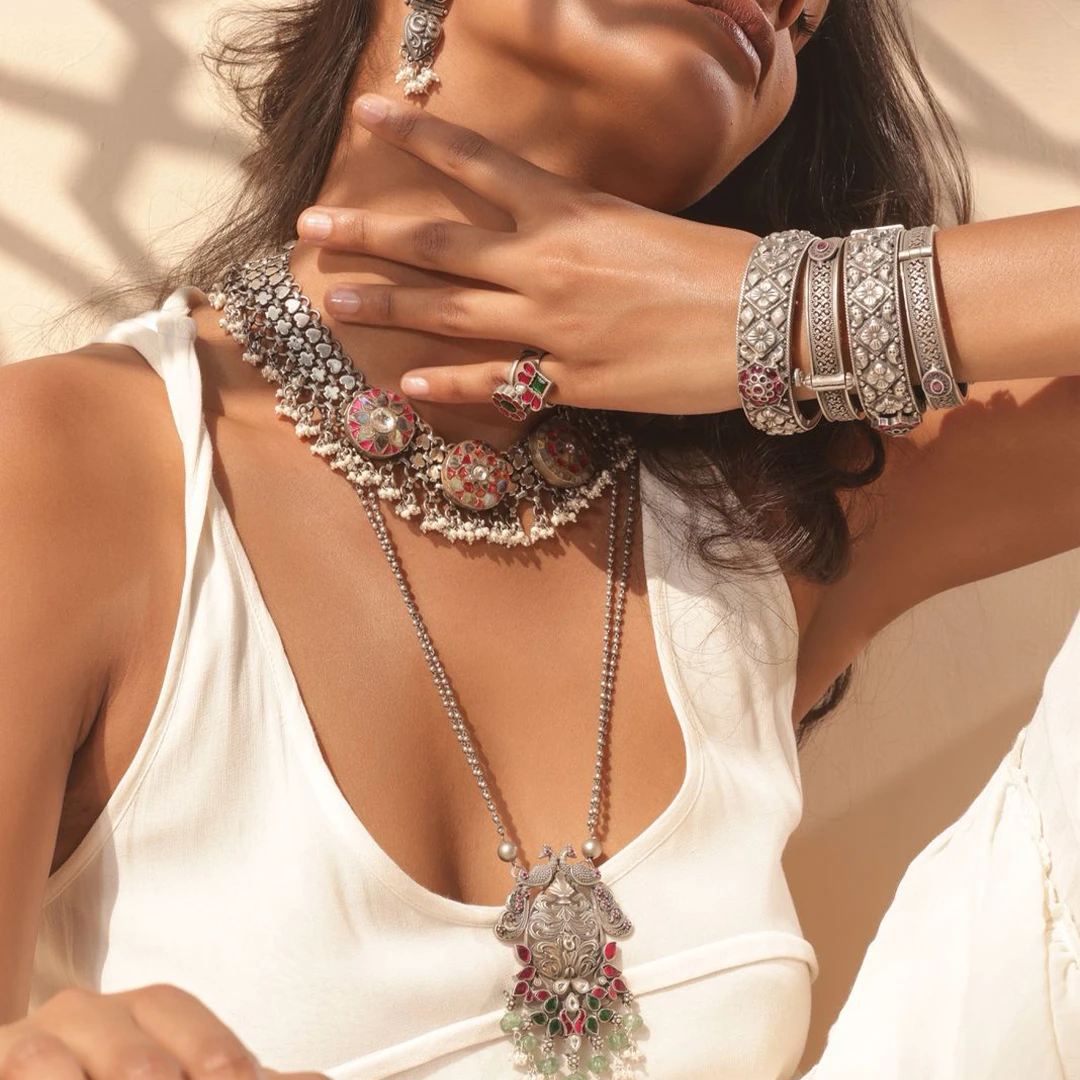
Jewellery photography is a science of light control.
- Gold reflects warm tones.
- Silver reacts differently to soft lighting.
- Diamonds disperse light into spectral colors.
Professional photographers spend hours adjusting angles, diffusers, reflectors, and macro setups to bring out natural brilliance without overexposure.
AI generates an interpretation of light. But it does not physically interact with the product.
- True color temperature
- Real shadow depth
- Accurate metal tone
- Actual gemstone reflection
Luxury buyers notice these differences immediately.
3. Brand Authenticity Matters
When customers buy jewellery online, they expect the product delivered to match what they saw.
AI images may:
- Alter proportions
- Enhance stone size
- Smooth metal excessively
- Modify color subtly
This gap between expectation and reality leads to returns, refunds, negative reviews, and brand distrust.
Real jewellery photography ensures what you show is what you sell.
4. Legal & Marketplace Compliance
Most major marketplaces require:
- Real product images
- Accurate representation
- No misleading digital alterations
AI-generated jewellery visuals can violate these guidelines if they are not based on actual product photography. For premium brands, compliance is non-negotiable.
5. Craftsmanship Deserves Real Representation
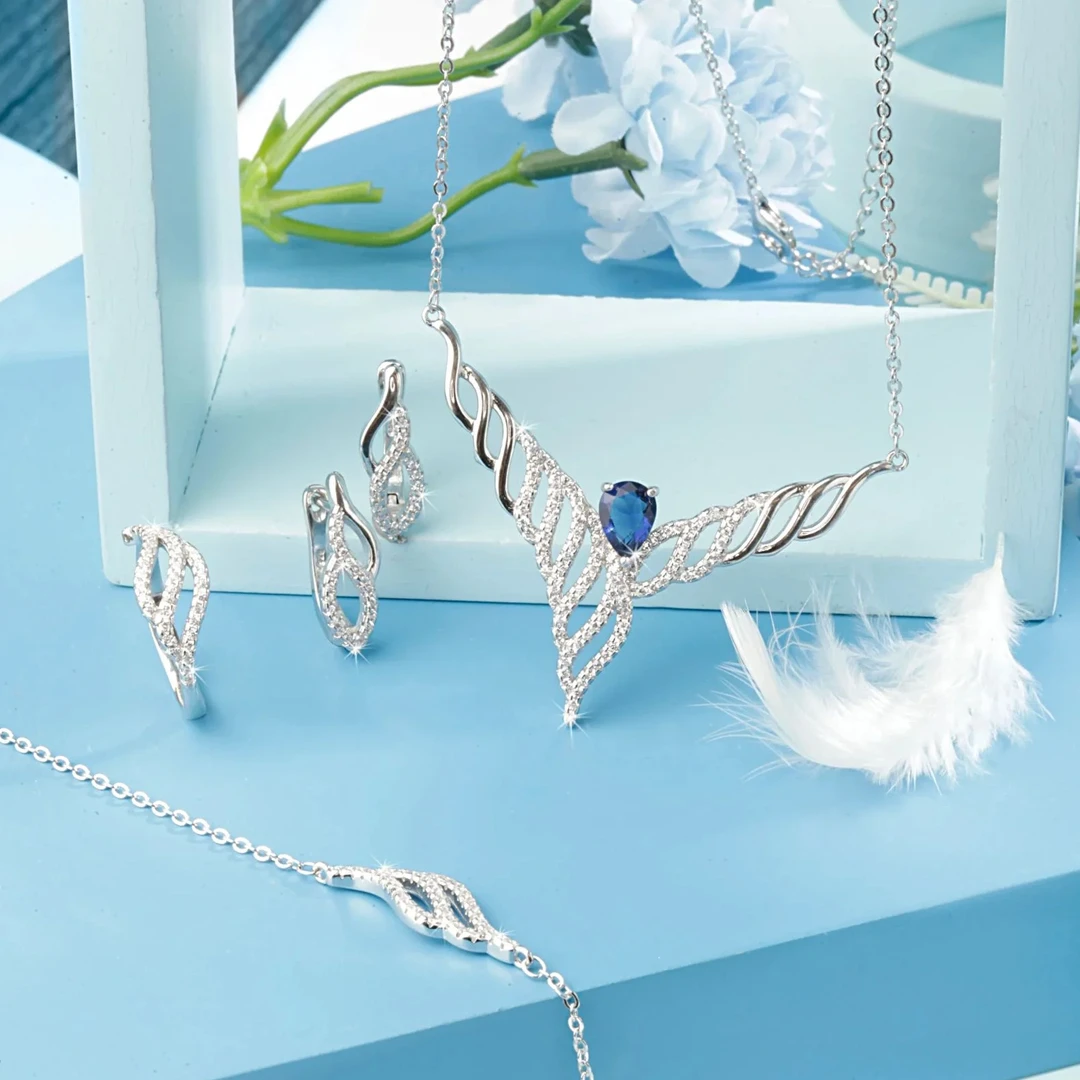
Jewellery is handcrafted art. Months of design, casting, polishing, and stone setting go into each piece.
A professional jewellery photographer captures:
- Micro detailing
- Texture authenticity
- True material depth
- Natural imperfections that define quality
Luxury is about realism — not artificial perfection.
6. Emotional Storytelling Requires Real Presence
Jewellery represents:
- Engagement
- Weddings
- Milestones
- Celebrations
- Legacy
When photographed on real models, with real light, real skin tones, and real movement, jewellery comes alive.
Emotion cannot be fully synthesized.
7. Consistency Across Collections
AI often produces variations in:
- Stone shape
- Setting style
- Proportion accuracy
- Surface finish
For brands launching collections, consistency is critical. Real photography ensures precision and uniformity.
8. Trust Is the Real Luxury
In high-value jewellery purchases, trust is everything.
- Professionally photographed products
- Authentic detailing
- Natural shine
- Editing that enhances but does not manipulate
AI can create beauty. Photography creates credibility.
Where AI Can Help (But Not Replace)
- Background enhancements
- Creative campaign concepts
- Mood board visualization
- Editing assistance
But it cannot replace:
- True macro detailing
- Real optical brilliance
- Authentic product documentation
- Brand trust
The Bottom Line
AI is a powerful tool. But in jewellery photography, tools cannot replace craftsmanship.
Jewellery is about precision, physics, emotion, and authenticity. Real product photography captures what AI can only attempt to imitate — genuine brilliance.
For brands that want short-term visuals, AI may seem tempting.
For brands that want long-term credibility and premium positioning, real jewellery photography remains unmatched.
Because in luxury, authenticity is not optional — it is everything.